Beginner Organic Fruit Garden: Berries, Citrus & Avocado Trees
Beginner Organic Fruit Garden: Berries, Citrus & Avocado Trees
Some links connected to this pin may be affiliate links. As an Amazon Associate, I may earn from qualifying purchases at no additional cost to you. Your support helps grow The Cozy Clean Life and my homestead-inspired dream. 🌿
Growing fruit at home feels like a big homestead dream, but it can start much smaller than an orchard. A few berry bushes, a strawberry bed, or a potted lemon tree can turn a backyard, patio, or sunny corner into a productive edible garden.
The biggest thing to understand is that fruit plants are not all the same. Strawberries, blueberries, raspberries, blackberries, citrus trees, and avocado trees each have different soil needs, fertilizer preferences, spacing requirements, and pollination habits.
Strawberries
Strawberries like full sun, well-drained soil, and soil that is slightly acidic. Oregon State Extension notes that strawberries generally prefer a soil pH around 5.6 to 6.5.
They grow well in the ground, raised beds, hanging baskets, towers, and containers. Space strawberry plants about 12 to 18 inches apart in garden beds, depending on variety and planting style.
For organic gardens, mix compost into the soil before planting and use straw, pine needles, or untreated mulch to keep berries off wet soil. Strawberries are usually self-fertile, so one plant can fruit, but several plants are better if you want a real harvest.
Blueberries
Blueberries are pickier than most beginner fruit plants because they need acidic soil. University of Minnesota Extension says blueberries require well-drained, loose soil high in organic matter with a pH around 4.0 to 5.0, while UC guidance commonly gives blueberry pH as 4.5 to 5.5.
This is why blueberries often do beautifully in pots: you can control the soil mix more easily. Use an acidic potting mix, pine bark, peat or coco-based organic matter, and an organic fertilizer labeled for acid-loving plants.
A soil such as this one is ideal for blueberries: Blueberry Soil
Blueberries need full sun for best fruiting. Plant bushes about 4 to 6 feet apart in the ground. Many blueberries are partly self-fertile, but planting two compatible varieties usually gives a better yield and longer harvest window.
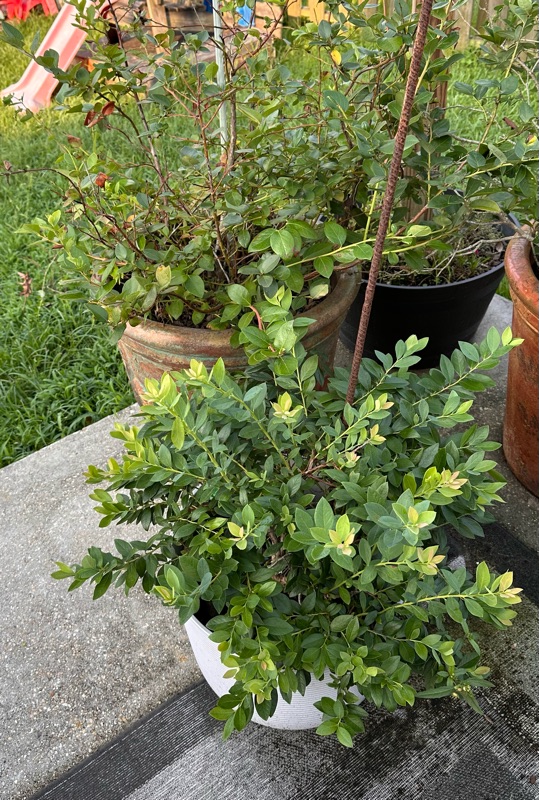
I started with just one blueberry plant but got a second one at the recommendation of a friend. The following fruiting season I had twice as many berries as the year before, so I believe in having two plants to get more yield. The biggest problem I have with my blueberries is that the birds and my dogs want to eat the berries before I can harvest them. I solved that problem with these nets: Fruit Tree Nets
Here are my two blueberry bushes now.
Raspberries
Raspberries like full sun, rich well-drained soil, and good airflow. Oregon State Extension notes raspberries prefer soil pH around 5.6 to 6.5.
Plant raspberries in rows where they can be trellised. Space plants about 2 to 3 feet apart, with rows about 6 to 8 feet apart if you have room. They can grow in large containers, but they need support and consistent water.
For organic fertilizer, use compost, worm castings, and a balanced organic berry fertilizer after plants are established. Most raspberry varieties are self-fruitful, so one plant can produce, but a small patch gives a better harvest.
Blackberries
Blackberries are similar to raspberries but often more vigorous. They like full sun, loamy well-drained soil, and room to spread. Extension guidance commonly places blackberries around pH 6.0 to 6.5 or 6.8, depending on region.
Space blackberry plants about 3 to 5 feet apart, depending on whether the variety is erect, semi-erect, or trailing. Give rows about 6 to 8 feet of space. They can grow in large pots, but choose thornless or compact varieties for containers.
Blackberries are usually self-fruitful, so one plant can produce. More plants mean more berries, but also more pruning, so start small unless you want your backyard to become a blackberry jungle with opinions.
Citrus Trees: Orange, Lemon & Lime
Citrus trees need warmth, sun, good drainage, and protection from freezing temperatures. UF/IFAS notes citrus will be more productive in full sunlight and recommends at least 15 feet between trees when planting in the ground.
Citrus does well in pots, especially dwarf varieties like Meyer lemon, key lime, calamondin orange, and some dwarf oranges. Mississippi State Extension recommends container citrus receive 6 to 8 hours of direct sun daily and grow in a well-draining citrus mix.
Find a well-draining citrus soil here: Citrus Soil
For organic gardens, use compost lightly, mulch around the tree without touching the trunk, and feed with an organic citrus fertilizer that includes nitrogen and micronutrients. Most common citrus trees are self-fertile, so one tree is usually enough for fruit.
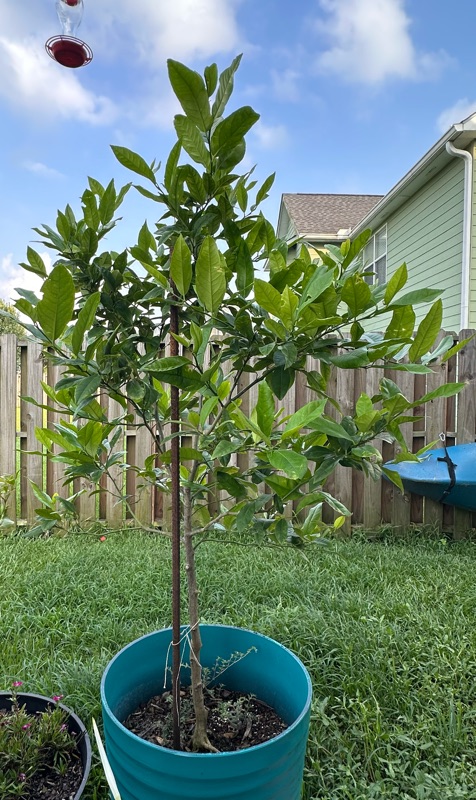
Here is a picture of my lemon tree I grew from a seed. It is only 2 years old, so no lemons yet.
Avocado Trees

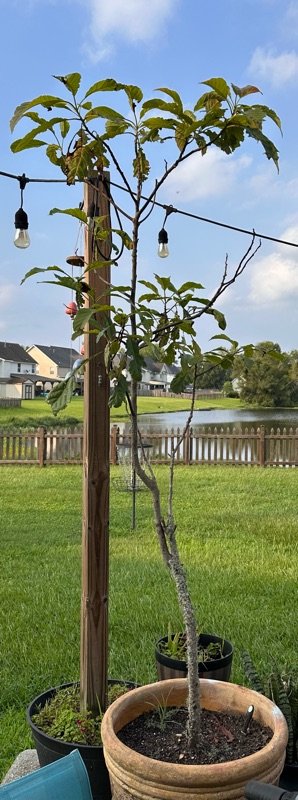
Above is not my picture, but this is my goal for my avocado tree. My sad avocado tree is below:
Avocado trees need full sun, warm temperatures, excellent drainage, and protection from frost. They hate soggy roots, so loose well-draining soil is essential. In the ground, avocado trees need a lot of space depending on variety, often much more than citrus.
Try this well draining organic avocado soil: Avocado Soil
Avocados can grow in pots, especially dwarf or semi-dwarf varieties, but container avocados are more demanding. They need a large pot, excellent drainage, consistent moisture, and realistic expectations. A potted avocado can be beautiful, but fruiting indoors or in small containers is not guaranteed.
For pollination, avocados are more complicated than citrus. Some varieties are self-fertile enough to fruit alone, but many produce better with a compatible Type A and Type B avocado nearby. In warm climates where avocados grow well outdoors, planting two compatible varieties can improve fruit set.
Best organic soil and fertilizer approach
For all fruit plants, start with a soil test when possible. This matters most for blueberries because they need acidic soil, but it also helps with berries and fruit trees in general.
Find a digital pH meter here: Soil pH Meter
A good organic fruit garden starts with:
Compost for organic matter
Mulch for moisture control
Worm castings for gentle nutrients
Acid-loving fertilizer for blueberries
Berry fertilizer for strawberries, raspberries, and blackberries
Citrus/avocado fertilizer for citrus and avocado trees
Drip irrigation or deep watering for consistent moisture
Avoid overfertilizing. Too much nitrogen can create lots of leafy growth but fewer flowers and fruit.
Beginner-friendly takeaway
If you are just starting, strawberries and blackberries are usually easier than blueberries. Blueberries are worth growing, but they need acidic soil. Citrus trees are wonderful in pots if you have warmth and sun. Avocados are more advanced because they need excellent drainage, warmth, space, and sometimes a pollination partner.
You do not need a full orchard to start an organic fruit garden. Start with one raised strawberry bed, two blueberry bushes in pots, or a dwarf lemon tree on the patio. Small steps count, and future-homestead-you will be thrilled.


Comments
Post a Comment